Tag Archives: Rug Preservation

How to Choose Rug Padding: A Practical Guide

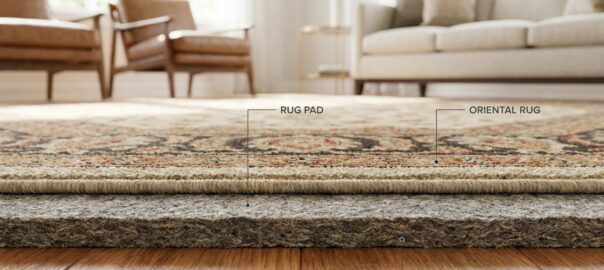
A good rug pad does three things: it keeps the rug from sliding, cushions foot traffic, and protects both the rug and the floor underneath. We see the damage from bad pads all the time – cheap foam that crumbles into orange dust, rubber backing that bonds to hardwood finish, and no pad at all under a rug that’s worn through in the walking lanes. Choosing the right pad is cheaper than repairing a rug that wasn’t protected.

Start with your floor

The floor you’re covering decides more than the rug does. The wrong pad can leave permanent marks that no cleaning removes.

Hardwood and laminate

Use a natural rubber pad or a felt-and-natural-rubber combination. Avoid anything labeled PVC, vinyl, or “adhesive” backing. Those plasticizers migrate into wood finish over months and leave a hazy, sticky film or discoloration that follows the exact shape of the pad. We’ve pulled back rugs to find a perfect waffle print burned into the floor.

Tile, stone, and concrete

Grip is the main concern here since these floors are slick. A rubber or rubber-blend pad works well. On porous stone like marble or travertine, stick with natural rubber for the same reason as hardwood – synthetic compounds can stain.

Over wall-to-wall carpet

A rug over carpet wants to creep and bunch. Use a firm, low-profile pad made for this purpose, sometimes sold as a “rug-on-carpet” pad with a textured grip surface. A thick cushioned pad makes the problem worse because it adds instability.

Side-by-side comparison of a crumbling cheap foam rug pad and a clean felt-and-natural-rubber rug pad
A cheap foam pad after a few years next to a felt-and-natural-rubber pad – the foam crumbles into dust while the felt-and-rubber pad stays intact.

Match the pad to the rug

Thin, flat-woven rugs and thick hand-knotted rugs need different support.

  • Flat-weaves and kilims: These slide easily and have no pile to grip. A thin rubber pad with good surface traction keeps them in place without lifting the edges.
  • Hand-knotted wool and Persian rugs: A denser felt pad, roughly 1/4 inch, absorbs foot pressure and keeps the foundation from flexing and cracking. The pile on these rugs lasts far longer with a cushion under it.
  • Silk and antique rugs: These are fragile and should move as little as possible. A firm felt pad distributes weight and reduces the micro-abrasion that grinds down old fibers. If you own pieces like these, the same care that goes into cleaning and restoring antique rugs should extend to what they sit on.

Understand the main pad materials

  1. Felt (needle-punched fiber): Best cushioning and sound dampening. Use under larger, heavier rugs where grip is less of an issue because the rug’s own weight holds it.
  2. Natural rubber: Best grip, floor-safe, and thin. Ideal for smaller rugs and runners that need to stay put.
  3. Felt and natural rubber combined: The most versatile choice – cushion on top, grip on the bottom. If you only buy one type, this is it for most living rooms and dining rooms.
  4. PVC and synthetic foam: Cheap and widely sold. We don’t recommend them. They break down within a few years, off-gas, and can damage floor finishes.

Get the size right

Cut the pad roughly 1 inch smaller than the rug on all sides. The pad should disappear under the rug and never peek out at the edges. A pad that reaches the fringe or sticks past the border catches feet and causes the rug to flip. Most felt and rubber pads cut cleanly with heavy scissors or a utility knife, so buy slightly large and trim to fit.

Diagram showing a rug pad cut about one inch smaller than the rug on all sides
Cut the pad about 1 inch smaller than the rug on all sides so it disappears underneath and never peeks past the edges.

How thickness affects traffic

In high-traffic areas – hallways, entryways, under dining tables – a firmer, thinner pad is more stable. In a bedroom or a formal sitting room where comfort underfoot matters more than durability, you can go thicker. For commercial spaces with constant foot traffic, grip and durability matter most; the same logic applies whether it’s a hotel lobby or a gallery floor we service. A pad that shifts under heavy use is a trip hazard and wears the rug unevenly.

Common mistakes we see

  • Using no pad under a valuable rug, then wondering why the walking path is threadbare.
  • Leaving a rubber-backed bath mat under a decorative rug – it stains floors fast.
  • Buying a pad the exact size of the rug so the edges stick out and curl.
  • Vacuuming the rug but never lifting it to clean under the pad, where grit collects and grinds at both sides.

Takeaway

For most New Jersey homes: buy a felt-and-natural-rubber pad, cut it 1 inch smaller than the rug on every side, and skip anything with PVC or foam if you have hardwood or stone. Lift the rug and pad twice a year to vacuum the grit underneath. A pad that costs a fraction of your rug’s value will add years to its life.

A Homeowner’s Guide to Oriental Rug Cleaning in NJ

Why Oriental rugs aren’t like wall-to-wall carpet

A hand-knotted Oriental rug is built to last generations, but only if you treat it like the textile it is. The dyes, the wool, the foundation, and the way the pile is knotted all react differently to water, heat, and cleaning chemicals than machine-made carpet does. If you hire a company that cleans your rug the same way they clean your living room broadloom, you can end up with bleeding dyes, dry-rotted fibers, or a rug that shrinks and buckles.

Below is what we tell homeowners who call us confused about how to care for a rug they inherited, bought while traveling, or picked up at an estate sale here in New Jersey.

First, know what you actually own

Before you clean anything, figure out what kind of rug you have. This drives every decision.

  • Hand-knotted vs. machine-made: Flip the rug over. If the pattern on the back is as clear as the front and the knots look slightly irregular, it’s likely hand-knotted. A perfectly uniform back usually means machine-made.
  • Fiber: Wool is the most common and the most forgiving. Silk is delicate, prone to dye bleed, and should never be handled by a general carpet cleaner. Cotton foundations are common in Persian rugs.
  • Age and value: An antique or a fine silk piece deserves specialist handling. If you’re unsure whether your rug qualifies, it’s worth talking to someone who handles antique rug cleaning and restoration before you let anyone put water to it.

What routine home care looks like

Most rug damage we see isn’t from a single spill — it’s from years of grit ground into the foundation. Sand and soil act like tiny blades at the base of the knots.

Vacuum the right way

  1. Vacuum in the direction of the pile, not against it.
  2. Skip the beater bar on fringes — it tears them.
  3. Vacuum the back of the rug a few times a year to shake loose embedded grit.

Rotate and lift

Rotate the rug 180 degrees once or twice a year so foot traffic and sun fade evenly. Use a quality rug pad; it cushions the fibers and stops slipping, which reduces wear along creases.

Act fast on spills — but carefully

Blot, never rub. Rubbing pushes the stain into the foundation and can distort the pile. Use a clean white cloth and cool water. Avoid store-bought spot removers with bleach or harsh solvents; on natural dyes they can strip color permanently. If wine or pet urine soaks all the way through, blotting at home only buys you time — the odor and staining live in the foundation and need a full immersion wash.

Why steam cleaning and DIY shampoo are risky

The two most common ways homeowners ruin an Oriental rug:

  • Truck-mounted steam cleaning: The heat and pressure meant for synthetic carpet can set stains, weaken wool, and cause older vegetable dyes to run.
  • Rental machines and grocery-store shampoos: These leave detergent residue in the pile that attracts dirt faster, so the rug looks dingy again within weeks.

A proper Oriental rug cleaning is done off-site, by hand or in a controlled wash, where the dyes are tested for colorfastness first, the rug is dusted to remove dry soil, washed with pH-appropriate solutions, rinsed thoroughly, and dried flat or hung in a controlled environment. That’s a very different process from what happens in your home.

What to expect from a NJ rug cleaner

When you call a specialist, a good one will ask questions before quoting anything: fiber type, age, size, and what kind of soiling or damage you’re dealing with. Look for a company that:

  • Tests dyes for bleeding before washing
  • Cleans off-site rather than steam cleaning in your home
  • Handles repair and re-fringing, not just cleaning
  • Offers free pickup and delivery so a large, heavy rug never gets folded or dragged

Experience matters here more than in almost any other home service. It’s fair to ask how long a company has been doing this and whether they handle silk, antiques, and repairs in-house. You can learn a lot about a shop’s background and specialties from their company history and rug care experience before you hand over a piece you care about.

How often should you have it professionally cleaned?

For most New Jersey households, every three to five years is a reasonable interval — sooner if you have pets, kids, high traffic, or allergy concerns. Rugs in low-traffic rooms can go longer. Between professional cleanings, consistent vacuuming and prompt spill treatment do most of the work.

Your takeaway

Check the back of your rug this week to confirm whether it’s hand-knotted, note the fiber, and set a vacuum-and-rotate routine. When it’s time for a deep clean, choose off-site washing by a rug specialist over any in-home steam service — and never treat a silk or antique piece yourself.

How to Preserve Your Rug

take care

If you have a rare  or antique rug, it helps to be aware of environmental or incidental stresses that can cause the color and texture of your rug to be damaged. By avoiding the following, you can preserve the structural integrity, sheen, color, and texture for years to come.

Sunlight / UV Light / Heat

Sunlight will cause the irreversible fading of color and make fibers degrade faster. If you are placing a rug by direct sunlight, your windows should be fit with 100% UV protective glass.

Read More →