 732-456-5511
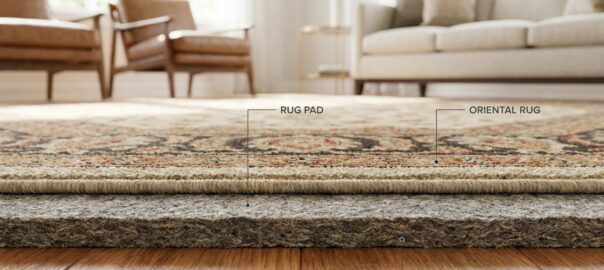
A good rug pad does three things: it keeps the rug from sliding, cushions foot traffic, and protects both the rug and the floor underneath. We see the damage from bad pads all the time – cheap foam that crumbles into orange dust, rubber backing that bonds to hardwood finish, and no pad at all under a rug that’s worn through in the walking lanes. Choosing the right pad is cheaper than repairing a rug that wasn’t protected.
Start with your floor
The floor you’re covering decides more than the rug does. The wrong pad can leave permanent marks that no cleaning removes.
Hardwood and laminate
Use a natural rubber pad or a felt-and-natural-rubber combination. Avoid anything labeled PVC, vinyl, or “adhesive” backing. Those plasticizers migrate into wood finish over months and leave a hazy, sticky film or discoloration that follows the exact shape of the pad. We’ve pulled back rugs to find a perfect waffle print burned into the floor.
Tile, stone, and concrete
Grip is the main concern here since these floors are slick. A rubber or rubber-blend pad works well. On porous stone like marble or travertine, stick with natural rubber for the same reason as hardwood – synthetic compounds can stain.
Over wall-to-wall carpet
A rug over carpet wants to creep and bunch. Use a firm, low-profile pad made for this purpose, sometimes sold as a “rug-on-carpet” pad with a textured grip surface. A thick cushioned pad makes the problem worse because it adds instability.

Match the pad to the rug
Thin, flat-woven rugs and thick hand-knotted rugs need different support.
- Flat-weaves and kilims: These slide easily and have no pile to grip. A thin rubber pad with good surface traction keeps them in place without lifting the edges.
- Hand-knotted wool and Persian rugs: A denser felt pad, roughly 1/4 inch, absorbs foot pressure and keeps the foundation from flexing and cracking. The pile on these rugs lasts far longer with a cushion under it.
- Silk and antique rugs: These are fragile and should move as little as possible. A firm felt pad distributes weight and reduces the micro-abrasion that grinds down old fibers. If you own pieces like these, the same care that goes into cleaning and restoring antique rugs should extend to what they sit on.
Understand the main pad materials
- Felt (needle-punched fiber): Best cushioning and sound dampening. Use under larger, heavier rugs where grip is less of an issue because the rug’s own weight holds it.
- Natural rubber: Best grip, floor-safe, and thin. Ideal for smaller rugs and runners that need to stay put.
- Felt and natural rubber combined: The most versatile choice – cushion on top, grip on the bottom. If you only buy one type, this is it for most living rooms and dining rooms.
- PVC and synthetic foam: Cheap and widely sold. We don’t recommend them. They break down within a few years, off-gas, and can damage floor finishes.
Get the size right
Cut the pad roughly 1 inch smaller than the rug on all sides. The pad should disappear under the rug and never peek out at the edges. A pad that reaches the fringe or sticks past the border catches feet and causes the rug to flip. Most felt and rubber pads cut cleanly with heavy scissors or a utility knife, so buy slightly large and trim to fit.

How thickness affects traffic
In high-traffic areas – hallways, entryways, under dining tables – a firmer, thinner pad is more stable. In a bedroom or a formal sitting room where comfort underfoot matters more than durability, you can go thicker. For commercial spaces with constant foot traffic, grip and durability matter most; the same logic applies whether it’s a hotel lobby or a gallery floor we service. A pad that shifts under heavy use is a trip hazard and wears the rug unevenly.
Common mistakes we see
- Using no pad under a valuable rug, then wondering why the walking path is threadbare.
- Leaving a rubber-backed bath mat under a decorative rug – it stains floors fast.
- Buying a pad the exact size of the rug so the edges stick out and curl.
- Vacuuming the rug but never lifting it to clean under the pad, where grit collects and grinds at both sides.
Takeaway
For most New Jersey homes: buy a felt-and-natural-rubber pad, cut it 1 inch smaller than the rug on every side, and skip anything with PVC or foam if you have hardwood or stone. Lift the rug and pad twice a year to vacuum the grit underneath. A pad that costs a fraction of your rug’s value will add years to its life.