Category Archives: Rug Cleaning Tips

How to Tell If Your Oriental Rug Needs Cleaning

A good Oriental rug hides dirt well. That is part of the problem. The patterns, the depth of the wool, the natural oils in the fibers – they all mask the soil building up at the base of the pile. By the time a rug looks dirty, it has usually been dirty for a long time. Here is how to read the real signs before the damage becomes permanent.

Do the simple tests at home first

You do not need special tools to check a rug. You need a few minutes and some attention.

The grit test

Fold a corner of the rug back on itself, pile side out, and flex it gently. Then run your fingers down into the base of the pile and rub the foundation. If you feel sand or grit, or you hear a faint crunching sound when you flex the fold, there is embedded soil deep in the weave. That grit is the most destructive thing in a rug. Every step grinds those particles against the wool fibers and the foundation knots like sandpaper, cutting them a little more each day.
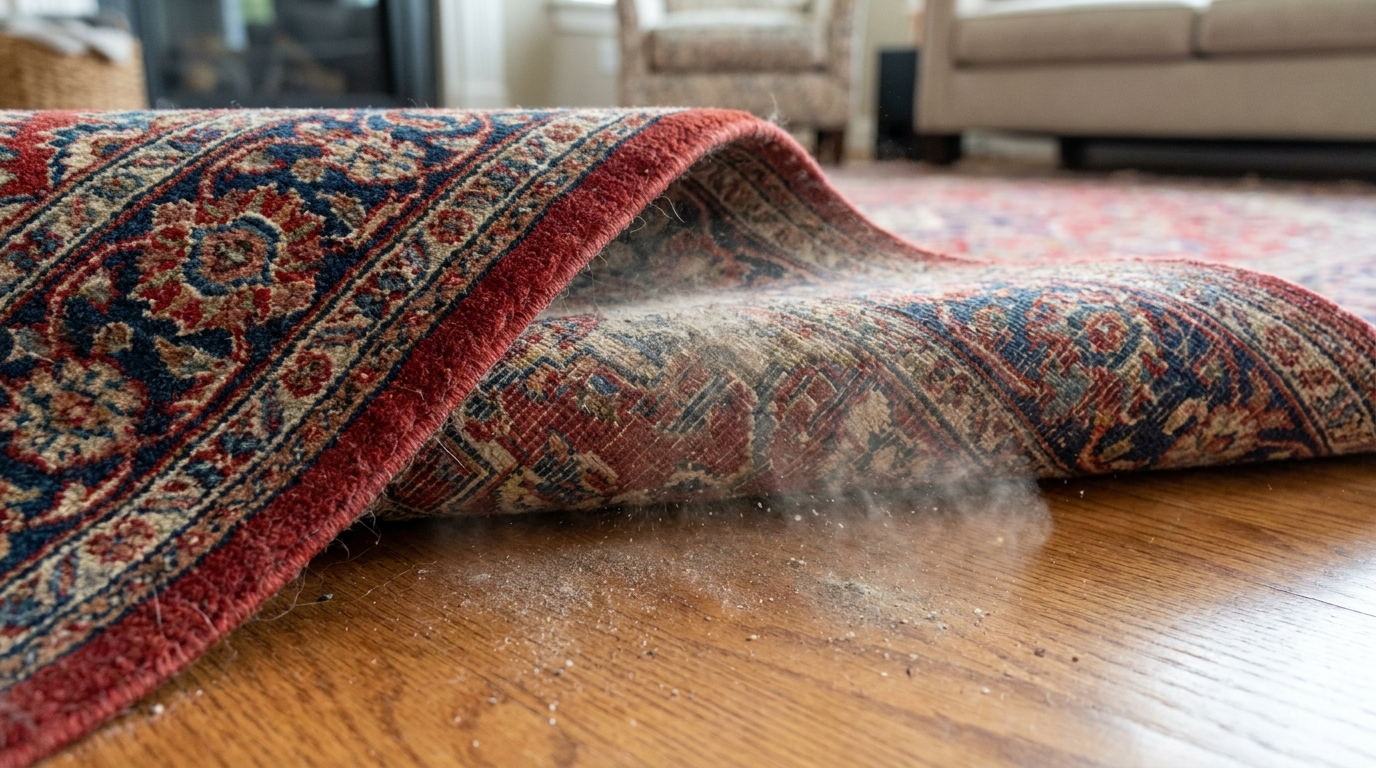
close-up photo of a rug corner folded back showing dust and grit at the base of the pile

The white cloth test

Press a damp white cloth firmly into a high-traffic area and hold it for a few seconds. If the cloth comes away gray or brown, the rug is carrying surface soil that regular vacuuming is not removing. This is common in entryways, hallways, and under dining tables.

The smell check

Get down close to the rug and smell it, especially in corners and areas near walls. A musty or sour odor means moisture has settled into the foundation and bacteria are at work. This is serious in homes with pets, in basements, or anywhere a rug has taken on humidity it never fully released.

Visual signs that cleaning is overdue

  • Dull, flat color. Oriental rugs should have a slight glow to the wool. When dirt coats the fibers, the colors go muddy and lifeless. Dampen a small hidden spot with water and look at the difference – if the wet area is noticeably brighter, soil is dulling the rest.
  • Visible traffic lanes. A darker path worn into the pattern where people walk means soil has concentrated there. Left alone, those lanes become permanent abrasion, not just dirt.
  • Matted or crushed pile. When the pile no longer springs back and stays pressed flat, trapped soil is weighing the fibers down and holding them matted.
  • Shedding more than usual. Some shedding is normal for new wool rugs. A sudden increase in loose fibers often means the foundation is being cut by embedded grit.

How often is normal

For most households, a professional wash every two to four years is a reasonable range. The variables that push you toward the shorter end:

  1. Pets in the home, especially ones that nap on the rug
  2. Young children and food spills
  3. Shoes worn indoors
  4. A rug placed in an entryway, kitchen, or heavily used living room
  5. Allergy sufferers in the household who benefit from removing dust and dander

A rug in a formal room that sees little foot traffic can go longer. A silk rug or a fragile antique needs a gentler, less frequent approach and careful handling, which is why antique rug cleaning is treated differently from everyday wool washing.

Spills and stains that cannot wait

Some situations call for professional attention right away rather than on a schedule:

  • Pet urine. It wicks into the foundation and the backing where home cleaning cannot reach. It also causes dyes to bleed and can rot cotton or wool foundations if left. The smell returns in humid weather because the salts reactivate.
  • Red wine, coffee, ink, or oil. Blotting helps, but these set fast in wool. Scrubbing spreads them and can set them permanently.
  • Flooding or water damage. A rug that has been soaked needs to be cleaned and dried flat and fast. Wet wool left more than a day or two grows mold and the dyes migrate.

If you are dealing with any of these, stop treating it yourself and get the rug assessed before the problem sets.

Why professional cleaning is different

A home steam cleaner or a store-bought carpet machine pushes water and detergent into the pile and leaves most of it there. On a hand-knotted rug that is a real risk: trapped moisture, dye bleed, shrinkage, and residue that attracts more dirt. Proper rug washing means dusting out the dry grit first, testing dyes for colorfastness, washing with the right pH for the fiber, rinsing completely, and controlled drying so the foundation never stays wet. If you want to understand how a shop approaches that process and what training stands behind it, our background and approach to rug care lays it out.

Your takeaway

Fold a corner back today and rub the base of the pile. If you feel grit, or a damp white cloth comes up dirty, or you catch a musty smell, the rug is due. Do not wait for it to look dirty on the surface – by then the wool has already been taking abrasion for months.

A Homeowner’s Guide to Oriental Rug Cleaning in NJ

Why Oriental rugs aren’t like wall-to-wall carpet

A hand-knotted Oriental rug is built to last generations, but only if you treat it like the textile it is. The dyes, the wool, the foundation, and the way the pile is knotted all react differently to water, heat, and cleaning chemicals than machine-made carpet does. If you hire a company that cleans your rug the same way they clean your living room broadloom, you can end up with bleeding dyes, dry-rotted fibers, or a rug that shrinks and buckles.

Below is what we tell homeowners who call us confused about how to care for a rug they inherited, bought while traveling, or picked up at an estate sale here in New Jersey.

First, know what you actually own

Before you clean anything, figure out what kind of rug you have. This drives every decision.

  • Hand-knotted vs. machine-made: Flip the rug over. If the pattern on the back is as clear as the front and the knots look slightly irregular, it’s likely hand-knotted. A perfectly uniform back usually means machine-made.
  • Fiber: Wool is the most common and the most forgiving. Silk is delicate, prone to dye bleed, and should never be handled by a general carpet cleaner. Cotton foundations are common in Persian rugs.
  • Age and value: An antique or a fine silk piece deserves specialist handling. If you’re unsure whether your rug qualifies, it’s worth talking to someone who handles antique rug cleaning and restoration before you let anyone put water to it.

What routine home care looks like

Most rug damage we see isn’t from a single spill — it’s from years of grit ground into the foundation. Sand and soil act like tiny blades at the base of the knots.

Vacuum the right way

  1. Vacuum in the direction of the pile, not against it.
  2. Skip the beater bar on fringes — it tears them.
  3. Vacuum the back of the rug a few times a year to shake loose embedded grit.

Rotate and lift

Rotate the rug 180 degrees once or twice a year so foot traffic and sun fade evenly. Use a quality rug pad; it cushions the fibers and stops slipping, which reduces wear along creases.

Act fast on spills — but carefully

Blot, never rub. Rubbing pushes the stain into the foundation and can distort the pile. Use a clean white cloth and cool water. Avoid store-bought spot removers with bleach or harsh solvents; on natural dyes they can strip color permanently. If wine or pet urine soaks all the way through, blotting at home only buys you time — the odor and staining live in the foundation and need a full immersion wash.

Why steam cleaning and DIY shampoo are risky

The two most common ways homeowners ruin an Oriental rug:

  • Truck-mounted steam cleaning: The heat and pressure meant for synthetic carpet can set stains, weaken wool, and cause older vegetable dyes to run.
  • Rental machines and grocery-store shampoos: These leave detergent residue in the pile that attracts dirt faster, so the rug looks dingy again within weeks.

A proper Oriental rug cleaning is done off-site, by hand or in a controlled wash, where the dyes are tested for colorfastness first, the rug is dusted to remove dry soil, washed with pH-appropriate solutions, rinsed thoroughly, and dried flat or hung in a controlled environment. That’s a very different process from what happens in your home.

What to expect from a NJ rug cleaner

When you call a specialist, a good one will ask questions before quoting anything: fiber type, age, size, and what kind of soiling or damage you’re dealing with. Look for a company that:

  • Tests dyes for bleeding before washing
  • Cleans off-site rather than steam cleaning in your home
  • Handles repair and re-fringing, not just cleaning
  • Offers free pickup and delivery so a large, heavy rug never gets folded or dragged

Experience matters here more than in almost any other home service. It’s fair to ask how long a company has been doing this and whether they handle silk, antiques, and repairs in-house. You can learn a lot about a shop’s background and specialties from their company history and rug care experience before you hand over a piece you care about.

How often should you have it professionally cleaned?

For most New Jersey households, every three to five years is a reasonable interval — sooner if you have pets, kids, high traffic, or allergy concerns. Rugs in low-traffic rooms can go longer. Between professional cleanings, consistent vacuuming and prompt spill treatment do most of the work.

Your takeaway

Check the back of your rug this week to confirm whether it’s hand-knotted, note the fiber, and set a vacuum-and-rotate routine. When it’s time for a deep clean, choose off-site washing by a rug specialist over any in-home steam service — and never treat a silk or antique piece yourself.

Why Light-Colored Wool Rugs Need Professional Cleaning

Light-colored wool rugs are popular for their soft, elegant appearance and ability to brighten a room. However, rugs in ivory, cream, and other light tones tend to show wear faster and often require professional cleaning more frequently than darker rugs. Even when they appear clean on the surface, large amounts of dirt can be trapped deep within the fibers.

Understanding how wool fibers work helps explain why professional cleaning is important for maintaining these rugs.

Read More →

Preventing Moth Damage on Rugs and Carpets

Moth infestations can quickly cause severe damage to rugs and carpets of all types – and very often, this damage occurs subtly – with moths only being detected after the damage is done. Luckily, the experts here at Aladdin Oriental Rug understand the in’s and out’s of moth prevention, moth infestation remedy, and moth damage repair for carpets and rugs. If you suspect that your carpets / rugs are being damaged by moth activity, contact the rug and carpet repair and restoration experts here at Aladdin Oriental Rug for instant solutions.

Read More →

Carpet Protection during Parties

Holiday parties can be some of the coziest and warmest moments of the entire year – however they can prove to be disastrous for your carpets and rugs. With all the merriment and cheer often comes celebratory eating and drinking, and (especially when drinking is thrown in the mix) this can pose major risks for stains. Here’s a guide from the carpet and rug cleaning team at Aladdin Oriental Rug on how to protect your carpets and/or rugs during your holiday parties.

Read More →