Category Archives: ORIENTAL RUG RESTORATION

Top Signs Your Oriental Rug Needs Expert Repair or Restoration

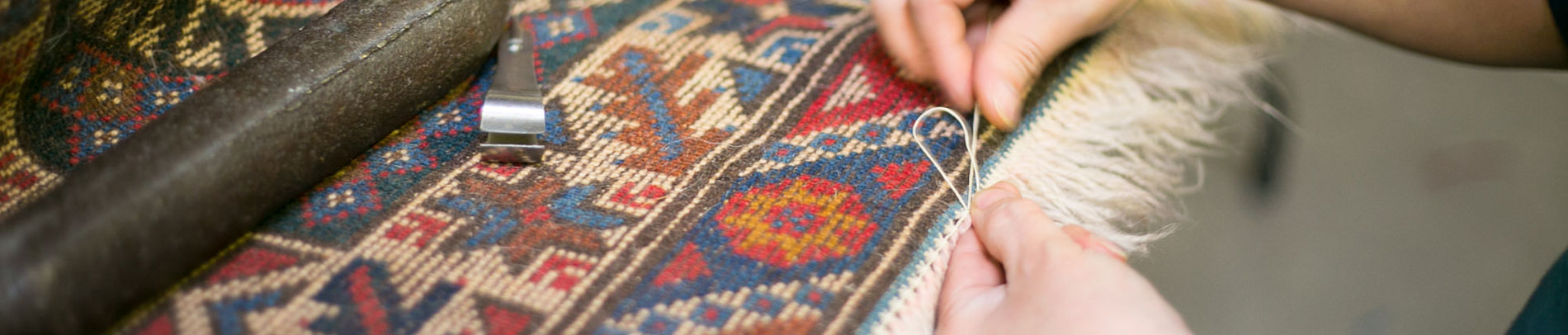
Over time, oriental rug may begin to show signs of wear over time, and early detection can prevent major damage. Many homeowners overlook problems until they become costly. Our expert New Jersey oriental rug repair and restoration services help preserve your rug’s original beauty. Here are the top signs that your Oriental rug really needs assistance from our repair and restoration team.

Read More →
Share Button

What should I do to preserve the appearance of my Oriental rug in New Jersey?

Here’s a guide to the importance of Oriental rug protection and maintenance, as prepared by the expert New Jersey Oriental rug and carpet cleaning services here at Aladdin.

Read More →
Share Button

Different Oriental Rug Weaving Techniques

Most Expensive Rugs Sold

Oriental rug weaving is a great skill which is passed down through generations. Rug hand weavers must maintain vast knowledge and skills with various weaving techniques. There’s a wide range of different patterns and weaving techniques, from kilims to piled rugs. In this blog post, the NJ oriental rug cleaning service team here at Aladdin Oriental Rug will detail some of the different common weaving designs for oriental rugs, and what defines them.

Read More →
Share Button

Rugs and Bugs

Sometimes rugs are improperly stored and end up becoming a meal for bugs. This can even happen to rugs sitting on a floor for years without being moved. Carpet beetles and moths regularly make full meals out of undisturbed areas. Sometimes, however, light bug infestation can be remedied, and the carpet or rug can be restored. Here’s Aladdin’s tips to protect rugs from being eaten by insects.


While rugs are in storage

If you’re putting a rug in storage, here’s how to properly take care of it to protect it from bugs.

Wash it

Washing will remove any bugs that may have stuck onto the rug, while also removing any impacted contaminants or dirt – that can also eventually dry out the cotton foundations of the rug, and potentially cause dry rot. You can usually tell if a rug has dry rot based on if it cracks when you roll it up. Dry rot can also be caused by improper washing out of any soap residue. Most professional rug washers will apply an insect repellent to the rug as a final step to washing.


Rolling up and Wrapping

We don’t recommend folding up rugs, as it stresses out their foundational fibers. It’s best to roll rugs tight from the bottom end first (when you pet the rug, if you’re going with the grain it will lead you to the bottom end.) We recommend rolling silk or older wool rugs with pile pointing outwards, and wrap in plastic for protection. If you’re rolling your rug with the pile inwards, wrap it in paper as opposed to plastic – but choose Tyvek paper rather than regular brown paper. NEVER WRAP WOOL WITH PLASTIC. Wool carries a lot of natural moisture, and wool wrapped in plastic can start “sweating” causing mildew.


Elevation

Make sure to keep rugs stored in high areas, far from the possibility of being affected by a flood. Never store heavy items in top of a rug, as the weight over time can cause extreme foundational damage to the rugs. Always check any rugs in storage on an annual basis to make sure that all packaging is securely intact. If the rug was truly professionally cleaned and had insect repellent placed on it, you can check up maybe once every two years, but you will need to reapply repellent every two to three years. Tyvek paper, however, can be rescued.


If your rug already has bugs

  • If your rug has an infestation, inspect it far from any of your other rugs, to prevent them from spreading.
  • Consider sending the rug to get fumigated by a licensed pest control facility.
  • If the infestation is only in one area, cut out that area to make it smaller, but still usable.
  • Measure the cost of any reconstruction versus a simple disposal and replacement of the rug.
  • Rugs eat carpets from the inside out, so you never really know how much damage was truly done.
  • Bugs don’t like sunlight or air, which is why they hide in dark areas. If the rugs have very limited bug action, simply take it outside into direct sunlight and leave it there for a few hours (making sure both sides of the rug are directly exposed to the sun) and then brush it with a stiff bristle brush to remove any bugs or larvae.
  • One action you can take is to place infested rugs inside an airtight plastic bag with a ton of mothballs, seal it, and leave it for a few weeks. When you reopen the bad, don’t breath any of the air coming from it, as the majority of mothball fumes are poisonous.
Share Button

Brief Guide to Fire and Smoke Damage

If you’re unlucky enough to suffer a fire in your home – or if your neighbor suffers one – smoke and ash in the air can easily affect rugs and carpets. Particulates are dangerous for humans – and any sort of natural fabric. Here’s Aladdin’s guide on how to tackle removing smoke and soot damage from rugs and carpets.


  • If rugs smell like smoke, most standard washes will take care of it by washing away soot particulates. After this, the rugs should be vacuumed regularly.

  • Heavily fire or smoke damaged rugs require both washing as well as professional deodorizing with specific odor removing solutions.

  • Some rugs that suffer direct fire damage from burning rubble or embers should simply be disposed of, as sometimes this damage is simply to correct to reweave or repair.

  • Wool has a high moisture content, which luckily causes it to self extinguish – which is why wool is used in so many hotel and airplane carpets.

  • Small amounts of direct fire damage burns can be reknotted, so sometimes rugs damaged in a fire can be saved.

  • Heavy ash and soot can be eliminated from rugs by professional rug washers, however should be removed as fast as possible, as it causes further damage over time.

  • Thankfully, silk rugs additionally contain a large amount of moisture, making them self-extinguishing, and some of the only items that can be saved from a fire.Wash all carpet fibers to remove soot particles.

Share Button

Dry Rot and Mold

Dry rot is one of the worst things that can happen to a rug. Mildew, dry rot, and mold are all various stages and types of fungi – and while mildew and mold can sometimes be removed, dry rot cannot be countered. Dry rot causes the foundational fibers of rugs to deteriorate and fall apart, and ruining its structural integrity. Sometimes, if stopped early enough, mildew and mold can be stopped, and you can go through with carpet restoration. Here’s Aladdin’s guide to dry rot, mold, and mildew.


Causes of Dry Rot

Dry rot is caused by either too much or too little moisture. Floods, leaks, or evaporation through improper storage in plastic can cause it. Pets can also cause dry rot by urinating on rugs. Buildup of residue from cleaning products can dry up rugs and cause dry rot, as well as any sort of peroxide or bleach.


How to spot dry rot

First of all, look for any color discoloration, especially areas with bluish mold. If there’s sources of water near rugs, look for any problems near that area of the rug. Common culprits are plants, water coolers, or ceiling leaks. Once mold reaches the inner foundational fibers of a rug, it’s pretty much impossible to remove it. If an area of a rug is stiff, or cracks when you bend it, or gives you a hard wood like knocking sound when you hit it with your knuckles, you’re dealing with dry rot.


Antique rug fibers can become brittle over time, and should not just be bent to check up on dry rot. With these rugs, look for any signs of moisture or spills. Common telltale signs are any splits or severe cracks across the borders of rugs.


Combatting Dry Rot

  • First, take a picture of any signs of dry rot to show to a rug or carpet professional.
  • If there’s any mildew or mold on the rug, use disinfection or sanitization solutions to combat it. If there’s dry rot involved, you can lessen the cracking and stiffness with petroleum or denatured alcohol.
  • Some keratin products can add levels of suppleness or sheen to rug fibers, that get built up over time, but requires lots of continued use for a true effect. These solutions can make an antique rug look amazing, when it’s truly not in great condition – so when you’re purchasing rugs keep this in mind, and allow a licensed appraiser to inspect it.
Share Button

Toughest Stains to Remove

Toughest Stains

Many carpet owners understand that the severity of stains vary based on what kind of liquid caused the stain to start with. While dirt and mud can pose one problem, red wine or oil can be a whole different nightmare. Some kinds of stains can be removed with relative ease, while some other kinds of stains require quite a bit more effort, as well as some specialized cleaning tactics. Then there’s the worst kinds of stains – that really do require intervention from a carpet and rug cleaning professional. In this blog entry, I’ll review the 5 worst possible carpet stains – and how to deal with them.


Red Wine Stains

Even if red wine has been proven to contribute to heart health, it certainly won’t help your heart when your carpet becomes immersed in the red liquid. We recommend blotting up fresh wine spills to remove as much liquid as possible, and then using a clean cloth to dab away the stain with a cleaning solution made of a tablespoon of hand safe dishwashing liquid, a tablespoon of white vinegar, and two cups of warm water. Make sure to sponge off the carpet with water after using the solution to avoid making it smell like vinegar. If this stain is proving extremely tough, use a mixture of one part handwashing liquid, two parts hydrogen peroxide, and extreme elbow grease – just make sure to test it on a small area of the carpet first to make sure it doesn’t damage or bleach it – and always make sure to wipe it off with a slightly wet cloth after using it.


Pet Related Stains

If your pet follows the call of nature on your carpet or rug, soak up as much of the liquid with newspaper or towels as soon as possible, wash it with cold water, and let it dry. We recommend using a store-bought cleaner or odor neutralizer – however, some stains might require a bit more effort. Don’t use any stain removal tools that add any heat to the carpet, as heat will set the stain in place. If this strategy doesn’t work initially, then re wet the carpet, and spray it with an enzyme cleaner (you can find these at many pet stores) directly on the stain. Let the cleaner soak in overnight, then soak it all up with paper towels. If none of these work, consider using a wet vac.


Blood

We recommend dabbing blood stains with a solution made of two cups of cold water and a tablespoon of hand dishwashing soap. If this doesn’t work, dampen it with a teeny amount of hydrogen peroxide – of course, making sure that it doesn’t stain or bleach your carpet or rug. Leave the hydrogen peroxide on the stain for up to an hour, and dab at it with a cloth – try repeating this as many times as you can. If hydrogen peroxide doesn’t lift up the stain, contact a professional cleaner – the sooner you deal with a blood stain, the better, as it’s much easier to remove before it dries and sets in.


Long Lasting Stains

If you have a stain that’s remained on a carpet or rug since before you can remember, make sure to enlist the efforts of hydrogen peroxide based cleaning products – and if this doesn’t work, a professional wet vac cleaning service. We can’t promise that even these strategies will work on stains that have long established their home on carpets or rugs, but we can say that in these situations, hiring a professional cleaner is the best bet. The only other alternative is to place furniture on top of the stain to hide it.


Bleach

This is the worst possible stain. Put protective rubber gloves on, soak up the bleach stain with a cloth, and then use the cold water and dishwashing liquid solution to dab the stain up from the outside. Bleach will lighten the color of your carpet, so it needs to be diluted, removed, and soaked up as soon as possible if you want to avoid any long lasting damage. So if you see bleach spill on your carpet or rug, spring into action as soon as possible – otherwise, prepare to get used to an oddly colored blotch that you can always cover up with furniture.  

Share Button

Spring Cleaning Allergy Tips


As the thermometer creeps up and Spring and Summer arrive, many people will begin sneezing – a sign that allergy season has officially started. While the warmth of the sun surely will be welcome over the freeze of a few months ago, it also brings about a large amount of allergens – namely pollen which can make it’s way into the home, and stick inside upholstery and carpets. By utilizing regular carpet cleaning to eliminate impacted allergens and grout cleaning to remove any mold from tiles, you can prevent your allergies from getting that bad, so that instead of suffering from clogged up sinuses and a runny nose, you can get outside and enjoy the much nicer weather. Here’s some great tips for keeping your home healthier and allergy free.

Be Aware of What your Triggers Are

It’s important to learn what allergens trigger allergic reactions in you or your family members. The most common allergy triggers are animal dander, pollen, dust mites, mold spores, and cockroaches. If your triggers are outdoor alxlergens, keep your windows closed. If they are indoor allergens, open all the windows in order to air out the entire house. Read More →

Share Button

Draught Marks (Filtration Soiling) on Carpets

Draught Marks (Filtration Soiling) on Carpets

What are draught markings?

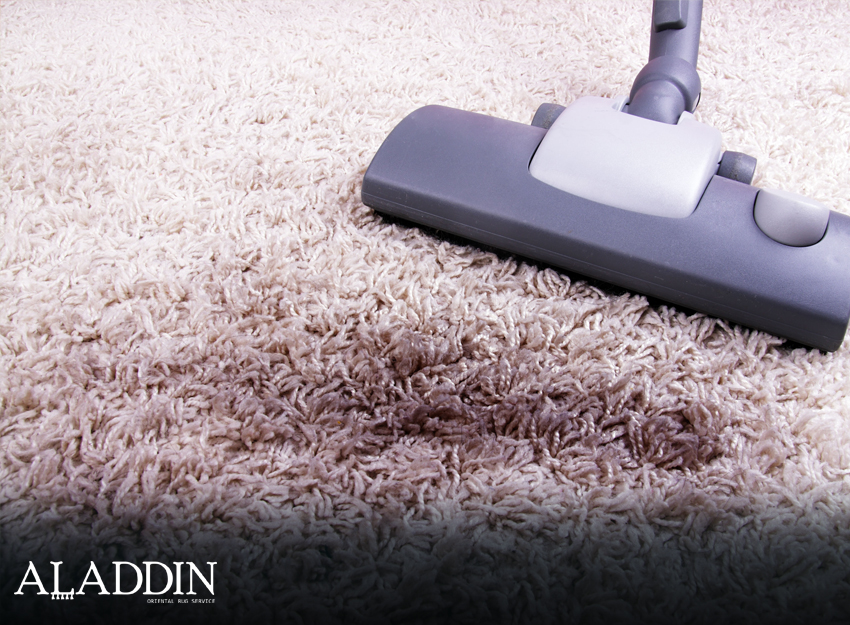
Draught markings are dark, dirty, or soiled spots that appear on carpets on the edges of the walls or under doorways. Sometimes they can even be found in other areas of the rug along the pattern of the floorboards.


Draught markings are otherwise known as filtration soiling, fogging, or dust markings. They are caused by contaminated air with microscopic dirt particles – the carpet filters the dirt from the air, causing an ugly stain on the carpet or rug.


Carpets can be soiled by contaminated air in these ways:

  • It passes upwards through gaps between the floorboards.
  • Through gaps under the skirting boards.
  • Through holes within the carpet caused by carpet fitting devices or nails.
  • Through gaps under doors with high air concentration.
  • Through gaps under the underside of curtains, which usually creates a wavy line pattern.
  • Through air vents that are positioned close to the carpet.


How can we prevent draught markings?

The most effective way of preventing these unsightly marks from marring your carpets is to draught proof your carpet – this can be accomplished by putting hardwood sheets above the existing floorboards, taping their joints together to prevent air leaks, putting paper on top of it for extra protection, and using a flexable weather stripping like mastic to seal any space between the floor and the board. If all these steps are followed it’s highly unlikely you’ll have the necessary air currents to create draught markings.


How can we cure draught markings?

Unfortunately it’s quite hard to completely remove evidence of a draught marking. Since the soiling of the rug happens on a microscopic level, the oil of the dirt might remain bonded to the fibers of the carpet. The ability to remove the stain depends on what kind of soil it’s made of and how long it has been on the carpet. The fresher the stain, the easier it is to remove. Venting marks – the marks that run the perimeter of rooms or rugged stairs, is caused by the limitation of upright vacuum cleaners to get right up to the carpet’s edge – prevented from doing so by bulky casing. Eventually all the unvacuumed dirt in the edges accumulates and becomes a serious black stain. We recommend the use of a crevice vacuum, or vacuum plug in to help suck up all the dirt caught up in the corners of your rug.

Share Button

How to Clean a Red Wine Stain

How to Clean a Red Wine Stain

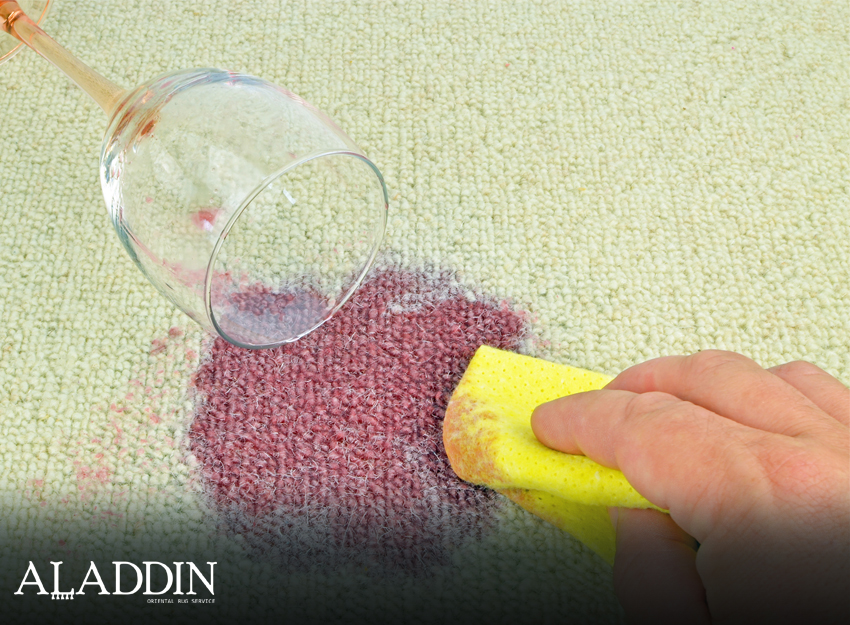
Picture this: you’re relaxing at home, enjoying a glass of red wine on the couch – allowing yourself to decompress after a long workday or busy weekend – when the worst happens. You slip. A noise startles you. You trip. The important thing is that the glass slips out of your grib, and it’s almost like it’s happening in slow motion – you watch, dejected, as a giant red stain appears on your perfect, (formerly) immaculate carpet.

What should you do? What emergency measures should you take? Should you be reaching for the bleach? Does cold water take out stains… or is it hot water? Try not to panic. It may look like dire circumstances but you can absolutely remedy the situation. Here’s the steps to follow so you can do that.


Soak up all the excess wine

Before you reach for any other cleaning solutions, grab an absorbent cloth and start blotting the stain, using a fresh (not absorbed yet) area of the cloth each time you blot down – the goal is to absorb as much liquid as you possibly can from the carpet. After you’ve absorbed as much liquid as you can, pour some clean water on the stain, and continue blotting it. Repeat this a few times – but you don’t want to completely saturate the couch with water, rather make sure that as much of the surface stain transfers onto the blotting cloth as possible. This will make the entire cleanup process much more effective.


Test all cleaners before final use

If you have a dark colored carpet, or a delicate antique rug, you don’t want to be using a harsh or intense cleaning solution that could degrade or abrade the fabric, damaging it. We recommend testing a small hidden spot of the fabrics reaction the solution before using it on the rest of it – this makes sure that the quality and color of the carpet won’t be affected by it – which could be irreversible.


Choose your Weapon

Carpet Stain Remover

The directions for this plan varies based on whatever brand you’re using – we recommend simply following the directions on the label if you don’t want to encounter any accidents.


Baking Soda

Mix baking soda and water on a 3:1 ratio until it’s a paste, and pat some of the paste into the stain completely. Once dry, vacuum off; keep in mind that for extra power try mixing baking soda with hydrogen peroxide.

Club Soda

The internal carbonation in a bottle of club soda helps it remove stains efficiently – we recommend using it when you’re blotting (instead of water.)


Vinegar

Vinegar works great on red wine stains – mix it with a bit of water and blot the stain – when you’ve done all that you can, blot afterwards with a bit of dish soap.


Dish Soap

Mix soap and hydrogen peroxide, apply it to the stain, allow it to rest and penetrate the stain and then blot it away.


Salt

Poar a huge amount of salt onto the stain and give it some time as it absorbs the time – this should be a fantastic immediate post-stain therapy – simply vacuum to finish up.


See what you’ve done

If you were not able to get rid of the entire stain (as many people are) it’s wise to call in professional assistance. The expert cleaners at Aladdin are prepared with top-of-the-line equipment to clean up all stains – including red wine. Although nothing beats a professional carpet cleaning, these tips should do you well in the event of an emergency, It’s wise to keep these items around the house.

Share Button